> For the complete documentation index, see [llms.txt](https://cranford-tech.gitbook.io/freelancer-marketplace/llms.txt). Markdown versions of documentation pages are available by appending `.md` to page URLs; this page is available as [Markdown](https://cranford-tech.gitbook.io/freelancer-marketplace/template-contents/option-sets.md).
# Option sets
### Categories
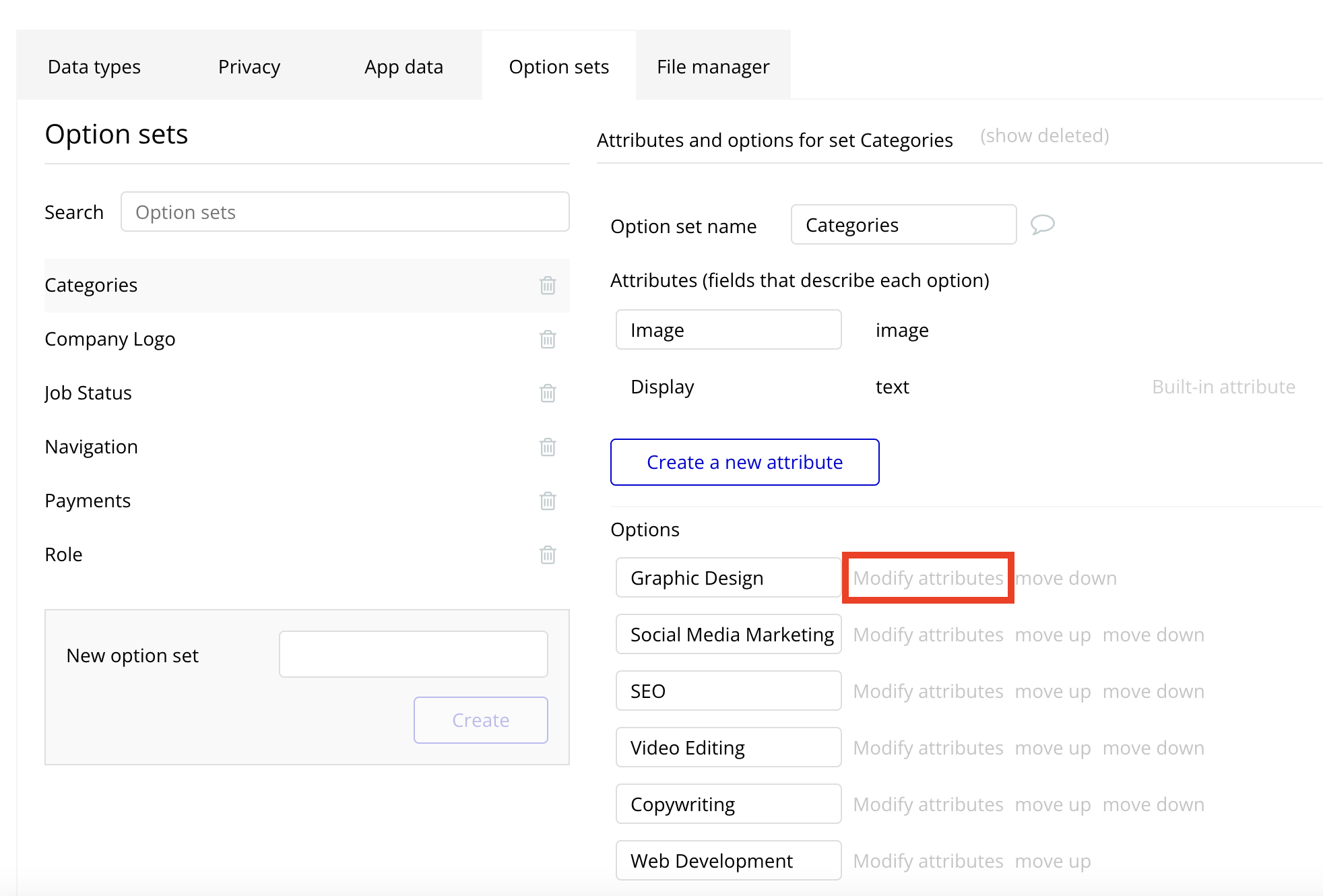
These are the categories that a service can fall under. They are used as a filter on the repeating group on the 'Search' page and a Freelancer will pick one when creating a job in the 'views-add-service' reusable.
Each option has:
* A **display** which is the name of the category (EG Graphic Design)
* An **image** which is used in the 'Popular Services' on the index page
You can modify the default categories by clicking on the 'Modify attributes' button:
### Company Logo
This option set contains an image that will be used as the platform's logo in the **navbar** and in the **sidebarnav**.
### Job Status
The 'Job Status' option set contains a number of stages that a job can go through:
* **awaiting confirmation** - when a Customer has submitted a proposal but it has not yet been accepted by the Freelancer
* **in progress** - when a Freelancer has accepted a job and is working on it
* **delivered** - when a Freelancer delivers work for the job
* **complete** - when the Customer marks the job as complete
### Navigation
The '**Navigation**' option set is used to show/hide various 'views' in the dashboard page. The display associated with each option is added to the page URL which results in certain views being shown/hidden. The options include:
* **services** - used to show the 'views-services' reusable element in the dashboard
* **jobs** - used to show the 'views-jobs' reusable element in the dashboard
* **profile** - used to show the 'views-profile' reusable element in the dashboard
* **new-service** - used to show the 'views-add-service' reusable element in the dashboard
* **edit-service** - used to show the 'views-edit-service' reusable element in the dashboard
* **messages** - used to show the 'views-messages' reusable element in the dashboard
* **inbox** - used to show the 'views-inbox' reusable element in the dashboard
* **job-detail** - used to show the 'views-job-detail' reusable element in the dashboard
### Payments
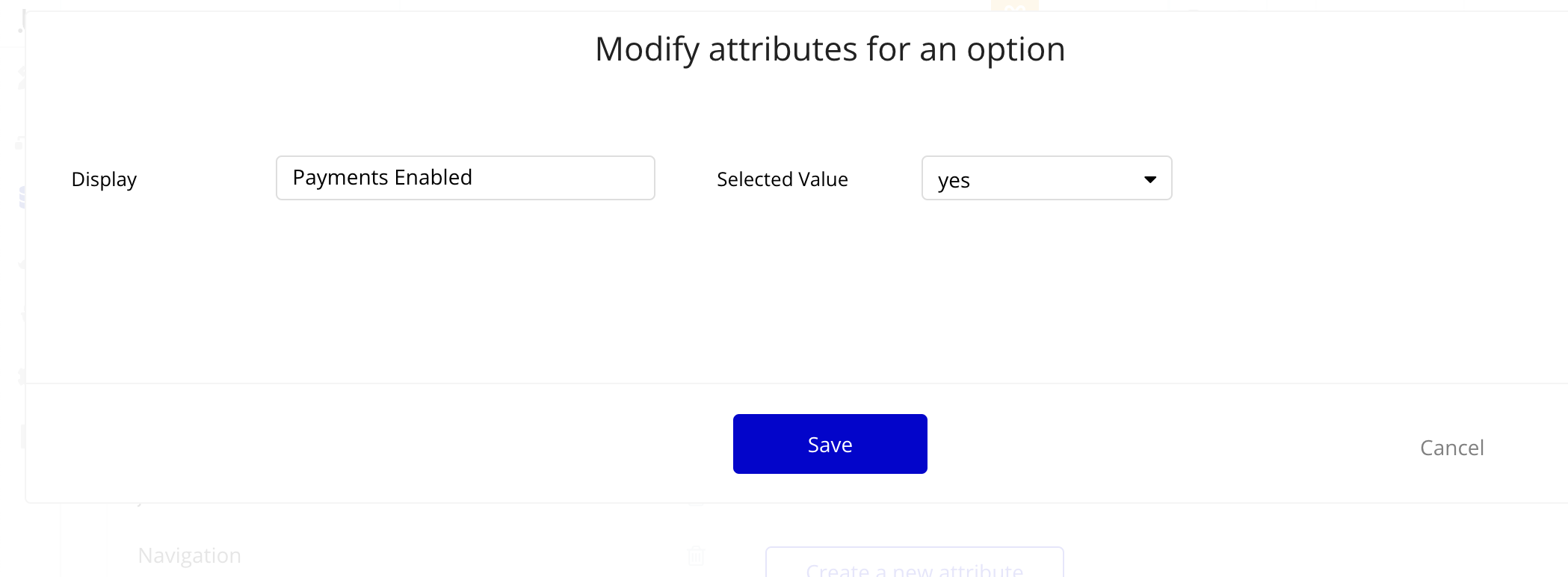
This option set is used to control whether or not the pre-built payment flows are activated. When the 'Payments Enabled Selected Value' is set to 'yes', the workflows will be active:
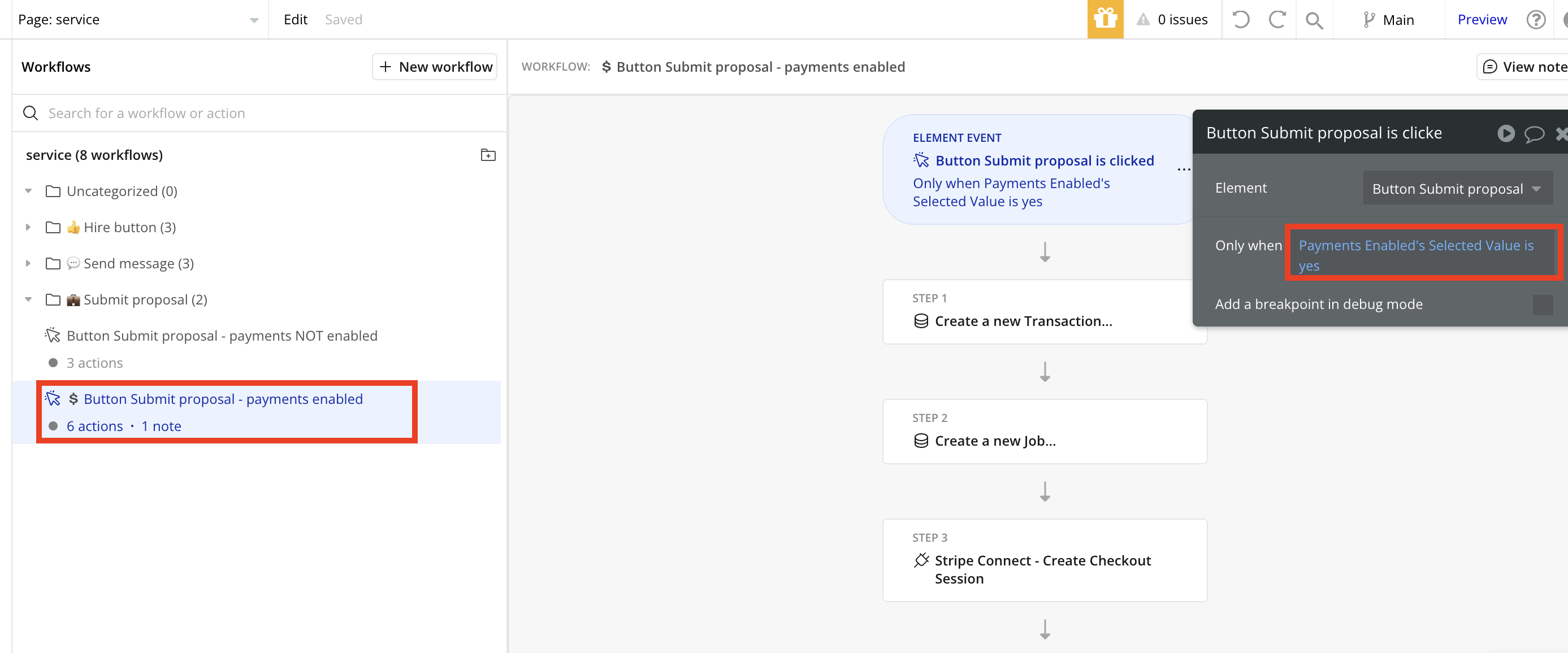
Conditional statements are used to control whether or not the pre-built payment flows are active. For example, when a Customer submits a proposal to hire a Freelancer and the 'Selected Value' is set to 'yes', the **Button Submit proposal - payments enabled** workflow will be active.
This workflow creates a new Transaction and Stripe Checkout Session when the Customer submits a proposal.
{% hint style="info" %}
All payment-related workflows that are enabled when the 'Selected Value' is 'yes' have the💲emoji before them.
{% endhint %}
If the 'Selected Value' is set to 'no', the **Button Submit proposal - payments NOT enabled** workflow will be run. This workflow does not create a new Transaction or Stripe Checkout Session.
For more details, see the Payments section of the documentation.
### Role
The 'Role' option set sets whether a user is a Customer or a Freelancer.